“I highly recommend this place — everyone is really nice and they make sure you feel comfortable.”Google · Kimberly Manilla · Mar 2026
“Podiatrist is very knowledgeable and approachable. Staff is professional and proactive.”Google · Ben C · Feb 2026
“His professional expertise and kind demeanor made my treatment feel effective and comfortable.”Google · Cecil Lynn Farrar · Feb 2026
“Every time I come with pain I leave this place feeling great!”Google · Wendy Aguilar · Nov 2024
“A front office that runs smoothly — you know the doctor MUST be a true professional.”Google · Jerika Steele · Oct 2023
“This is the greatest doctor I've ever met — professional, polite, and knows what he does.”Google · Don Jair Casas · Dec 2025
“Dr. P, Ms. Theresa, and Ms. Maria are some of the kindest people you'll ever meet.”Google · Charles Ward · Jan 2026
“Staff was friendly and helpful. Clear instructions and a plan for recovery.”Google · Maurico Payne · Jan 2026
“The best foot doctor I have found in 40 years.”Google · Dwight Herkness · Aug 2019
“I wish I could give Dr. Patish 10 stars!!! He has literally been a life changer.”Yelp · Troy E. · Aug 2019
“Thank you Dr. Patish for taking great care of my parents!”Google · Elizabeth Naranjo · Feb 2026
“He is amazing — truly cares about my quality of life.”Healthgrades · Mar 2019
Worn-Out Shoes: Signs It's Time for a New Pair
A podiatrist explains how shoes break down, the signs that a pair is done, why one mileage rule doesn't fit everyone, and when worn-out shoes point to a foot problem.
Shoes rarely fall apart all at once. The tread fades a little at a time, the foam slowly flattens, and the back of the heel gets softer. Because it happens so gradually, it's easy to keep wearing a pair long after it has stopped doing its job. Sometimes people notice a new ache first and only then look at their shoes.
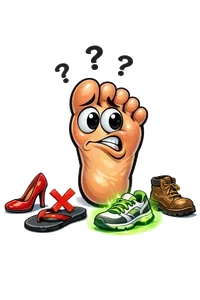
Before you read on. This article is general information, not medical advice. If you have diabetes, numb feet or poor circulation, a worn shoe can rub a sore you may not feel, so check your feet every day. New shoes should feel comfortable in the store. If a pair rubs or hurts, don't count on breaking it in.
This guide explains how shoes wear out and which parts go first. We cover the signs that a pair is done, and why a single mileage rule doesn't fit everyone. We also explain how to make shoes last, and when shoes that wear out early or unevenly point to a foot problem.
What Wears Out First
A shoe has four main parts. The outsole is the rubber tread on the bottom. The midsole is the foam layer that does most of the cushioning. The upper is the fabric or leather that holds your foot, and the heel counter is the stiff cup at the back of it. Each part wears at its own pace.
The midsole can lose much of its cushioning while the tread still looks fine. Cook and colleagues (1985) tested running shoes on a machine that copied the pounding of a heel, mile after mile. The shoes lost a good share of their shock absorption over the first few hundred miles. Expensive and cheap models lost cushioning at about the same rate. Shoes worn by real runners lost less than the machine-tested ones, but the drop was still marked. Shoes have changed since then, and newer foams may age differently.
The damage shows up under the foot, too. Verdejo and Mills (2004) measured pressure under the heel in running shoes as they aged. In that study, peak pressure under the heel had roughly doubled after about 500 kilometers of running. That study also found real damage in the foam under a microscope by 750 kilometers.
Your body adjusts as the shoe wears. Kong and colleagues (2009) had 24 runners log 200 miles in new shoes. As the cushioning wore down, the runners changed the way they ran to keep the impact the same. The type of cushioning made no difference.
Why There's No Magic Number
You've probably heard a rule like "replace your running shoes every few hundred miles." It's a reasonable rough guide, but it doesn't fit everyone. The foam itself matters. Wang and colleagues (2012) gave runners shoes that were identical except for the midsole foam. The different foams held their cushioning in different ways over the same distance.
The rest depends on you. Body weight, the surfaces you walk on, how you land and how many hours a day you spend on your feet all change how a pair ages. A nurse on concrete floors wears out shoes differently from a weekend walker on trails. That's why the signs below matter more than the calendar.
Signs Your Shoes Are Done
Check your shoes every month or so. Clinicians who assess footwear look at many of the same things, including wear, cushioning and how firm the heel counter is (Barton and colleagues, 2009; Menz and Sherrington, 2000).
- The midsole is creased or squashed. Deep wrinkles in the foam, or one side lower than the other, are signs the cushioning has worn down.
- The tread is worn smooth, especially at the heel, or worn through to the foam.
- The heel counter is soft. If you can fold it flat with your thumb, it no longer holds your heel.
- The shoe tilts. Set the pair on a table and look from behind. A shoe that leans to one side has broken down.
- The insole is flat or shows a deep print of your foot.
- The upper is torn, or a toe is poking through.
- Old aches come back, or your feet, knees or back feel sore after a walk that used to be easy. Worn shoes are one thing to check.
Worn Shoes, Slips and Falls
A worn sole loses its grip. Hemler and colleagues (2019) wore down the tread of slip-resistant work shoes in stages, using a lab machine. Once the smooth patch at the heel grew past a certain size, the shoes lost traction on a slick floor. That matters for anyone who works on wet or greasy floors.
Shoe features matter for older adults, too. Sherrington and Menz (2003) looked at the shoes 95 older adults wore when they fell and broke a hip. In that study, three out of four wore shoes with at least one feature thought to be unsafe. The most common were no laces or straps, a floppy heel counter and a sole that bent too easily. The study had no comparison group, so it can't show the shoes caused the falls. A review of footwear and falls advised older people to wear shoes with low heels and firm, slip-resistant soles, indoors and out (Menant and colleagues, 2008). Our post on preventing falls covers more.
How to Make a Pair Last
- Rotate two pairs. It spreads the wear across both. Malisoux and colleagues (2015) followed 264 recreational runners for several months. The ones who switched between more than one pair of running shoes had a lower risk of running injuries. That study looked at injuries, not at how long shoes last.
- Use each shoe for its job. Running shoes are built for forward motion. Court sports, yard work and long shifts on concrete each wear a shoe in different ways.
- Untie your laces to take shoes off. Stepping on the back to kick them off breaks down the heel counter.
- Keep them away from heat. A clothes dryer or a hot car can weaken the glue and the foam.
- Replace a worn insole. A new insole can freshen up a shoe that is otherwise in good shape. It can't bring back a crushed midsole.
When Early or Uneven Wear Points to a Foot Problem
Sometimes the shoe isn't the problem. Say one spot wears through long before the rest of the sole, or one shoe wears out much earlier than the other. Then the pattern is telling you something about how you walk. Our guides explain the common patterns.
- Shoe wear patterns and what they mean
- Shoes that wear out on the outside heel
- Shoes that wear on the inside edge
- Wear under the ball of the foot and the toes
Buying new shoes over and over won't fix a pattern like that. If your feet hurt as well, it's worth an exam. After an exam, a good store-bought insert is often a reasonable first step. For heel pain, store-bought insoles have done about as well as custom ones in trials (Whittaker and colleagues, 2018). In trials of active people, contoured foot orthoses lowered the overall rate of injuries and of stress fractures, though not of soft-tissue injuries. Soft shock-absorbing insoles did not lower injury rates (Bonanno and colleagues, 2017).
A custom functional orthotic is made from an impression of your feet. It makes sense when pain keeps coming back, your foot shape doesn't fit store-bought inserts, or the exam shows a clear mechanical problem. Our guide to how custom orthotics work explains the details. Orthotics wear, too. The top cover can usually be replaced when it wears out, so bring them to your checkups. If you have numbness or diabetes, any insert needs a careful fit and close skin checks.
When to See a Podiatrist
Make an appointment if any of these apply.
- Pain that started as your shoes wore down and doesn't settle in a new pair.
- One shoe wearing out much earlier than the other, or one spot wearing through first.
- Slips, trips or a fall, especially if you're an older adult.
- Calluses, blisters or color changes on a foot that is numb.
One practical tip: don't throw out your old pair before your visit. Worn shoes show the pattern far better than new ones. Bring them, along with any insoles or orthotics. Dr. Patish will look at the wear and examine your feet, then recommend what fits, whether that's new shoes, exercises, a store-bought insert or a custom orthotic. You can request a visit online.
Frequently Asked Questions
How long do running shoes last?
There's no single number. In lab studies, running shoes lost a good share of their cushioning over the first few hundred miles, and price made no difference. Body weight, surfaces, foam type and how you land all change the answer, so replace them when the midsole is creased or the tread is smooth, and check them whenever old aches return.
When should I replace my walking shoes?
The same signs apply to walking shoes. Replace them when the midsole is creased or squashed, the heel counter folds easily, the tread is smooth at the heel, or the pair tilts to one side on a table.
How often should I replace shoes if I stand all day at work?
There's no set schedule. Check them every month or so, because long shifts add up even when you don't walk far. Rotating two pairs spreads the wear.
What are the signs my shoes are worn out?
Deep creases in the foam, tread worn smooth or through, a heel counter you can fold flat, a shoe that leans when you look at it from behind, a flattened insole, a torn upper, or old aches coming back after walks that used to feel fine.
Can worn-out shoes cause foot pain?
They might. No study has shown it directly. What studies do show is that as cushioning breaks down, pressure under the heel rises and people change how they move. Worn tread also loses grip on slick floors. If pain doesn't settle in a new pair, have your feet checked.
Why do my shoes wear out so soon?
Common reasons are lots of hours on hard surfaces, using a shoe for a job it wasn't built for, and soft foam or rubber that trades durability for comfort. If one area or one shoe wears out much earlier than the rest, the way you walk may be part of it, and that's worth an exam.
Does rotating two pairs of shoes help?
For runners, it seems to. In a study of 264 recreational runners, those who switched between more than one pair of running shoes had a lower risk of running injuries. It also spreads the wear across two pairs.
Do custom orthotics wear out?
They do wear, though usually more slowly than shoes. The top cover tends to go first, and it can often be replaced. Bring your orthotics to your checkups so we can see whether they still fit your feet and your shoes.
Ready to Feel Better?
Most patients are seen within a few days. Schedule your visit today.