“I highly recommend this place — everyone is really nice and they make sure you feel comfortable.”Google · Kimberly Manilla · Mar 2026
“Podiatrist is very knowledgeable and approachable. Staff is professional and proactive.”Google · Ben C · Feb 2026
“His professional expertise and kind demeanor made my treatment feel effective and comfortable.”Google · Cecil Lynn Farrar · Feb 2026
“Every time I come with pain I leave this place feeling great!”Google · Wendy Aguilar · Nov 2024
“A front office that runs smoothly — you know the doctor MUST be a true professional.”Google · Jerika Steele · Oct 2023
“This is the greatest doctor I've ever met — professional, polite, and knows what he does.”Google · Don Jair Casas · Dec 2025
“Dr. P, Ms. Theresa, and Ms. Maria are some of the kindest people you'll ever meet.”Google · Charles Ward · Jan 2026
“Staff was friendly and helpful. Clear instructions and a plan for recovery.”Google · Maurico Payne · Jan 2026
“The best foot doctor I have found in 40 years.”Google · Dwight Herkness · Aug 2019
“I wish I could give Dr. Patish 10 stars!!! He has literally been a life changer.”Yelp · Troy E. · Aug 2019
“Thank you Dr. Patish for taking great care of my parents!”Google · Elizabeth Naranjo · Feb 2026
“He is amazing — truly cares about my quality of life.”Healthgrades · Mar 2019
Narrow and Extra-Narrow Work Shoes and Boots for Women Who Wear Orthotics
A podiatrist explains how to find work shoes and boots for a slim foot and a custom orthotic, what the safety-toe standard says about inserts, and which narrow styles to try first.
Nurses, cooks, servers, warehouse workers, farm and landscape crews, and women in uniform all spend long shifts on their feet. If you have slim feet, finding work footwear that fits can be frustrating. Many women end up in men's boots or in regular widths. Their heels slip, and their orthotics never sit quite right. A custom orthotic raises your heel and takes up space inside the shoe, so a loose fit tends to get looser.
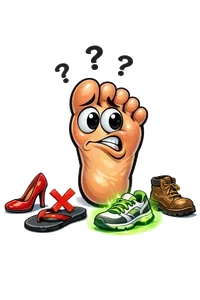
Before you read on. This article is general information, not medical advice. See a doctor promptly if something heavy landed on your foot, if a toe turns pale, blue or black, if numbness doesn't go away, or if pain wakes you at night. If you have diabetes, numb feet or poor circulation, check your feet every day. A shoe can rub a sore you can't feel, and those need care promptly.
There are good options for slim feet in slip-resistant work shoes. Narrow safety-toe boots for women are much harder to find, and we'll be honest about that. This guide explains what to look for, what the safety standard says about orthotics, and which shoes and boots to consider first.
The Hard Truth About Women's Narrow Work Boots
When we checked in October 2026, we couldn't find a women's safety-toe boot in a narrow width from any of the major work boot brands we looked at. At several of them, including Red Wing and Ariat, a women's B is the regular width, not a narrow one. Narrow women's options were mostly limited to slip-resistant work shoes and a few military-style boots.
So many women with slim feet wear a men's narrow boot in a smaller size. That can work, but it isn't automatic. Wunderlich and Cavanagh (2001) studied foot measurements from U.S. Army personnel. They found that women's feet differ from men's in shape, not just in size, with a higher arch and a smaller instep at the same length. When Krauss and colleagues (2008) scanned the feet of 847 people, men's feet were a little wider and higher than women's feet of the same length. Compared with foot length, though, the differences were small. Either way, a men's boot has to be judged on your own foot, especially at the heel and arch.
Do You Need a Narrow Width?
A few signs suggest the answer is yes:
- Your heel lifts inside the shoe or boot with every step, even with the laces snug.
- The two sides of the laces almost touch when you tighten them.
- Your foot slides forward when you walk downhill or step off a ladder.
- You keep getting blisters at the back of your heel.
The most reliable way to know is to have your feet measured. Have both feet measured for length and width while you're standing, and choose the size that fits the larger foot. Try work shoes on later in the day, wearing the socks you work in, with your orthotic in place.
| The label says | For women, it usually means |
|---|---|
| B (or M) | Standard width |
| 2A (AA) or N | Narrow |
| 3A (AAA), sometimes called Slim | Very narrow |
| 4A (AAAA) | Extra-narrow |
Width labels aren't exactly the same from brand to brand. One company's "slim" may fit like another company's 2A, so go by how the shoe actually fits your foot.
Safety-Toe Boots and Orthotics: Check Before You Swap
This part is important if your job requires a safety-rated boot. In the United States, safety-toe boots are tested to a standard called ASTM F2413. The current version is from 2024. It says that changing a boot's original parts, such as replacing or adding aftermarket footbeds or inserts, could cause the boot to fail the standard. In that case, the boot's ASTM marking would no longer be valid.
That doesn't mean you have to give up your orthotic. It means you should ask before you change what's inside a rated boot. Talk to your employer's safety officer about the rules at your workplace. Then ask the boot maker whether that boot can be worn with a custom orthotic. Keep the original footbed in case you need it. If your job requires a rated boot, don't assume an orthotic is allowed.
What to Look for in a Work Shoe for an Orthotic
A footbed that comes out. The factory footbed should lift out so your orthotic can take its place. Many makers don't mention this on their websites, so ask the store, or check it yourself before you buy.
Laces or straps, not slip-ons. Laces let you snug the fit around a slim foot and a bulky orthotic. Clogs and other slip-on work shoes are popular in health care and kitchens. But they can't be adjusted, so an orthotic can lift your heel right out of them.
A firm heel counter. Squeeze the back of the shoe above the sole. A firm heel counter holds your heel and your orthotic in position, while a soft one lets both of them slide.
A slip-resistant sole for wet floors. In a large trial in school food service, Bell and colleagues (2019) found that slipping injuries dropped sharply in districts that gave workers slip-resistant shoes. Look for the slip test the maker lists, such as ASTM F3445.
Comfort for long hours. A review by Waters and Dick (2015) linked prolonged standing at work to leg pain, tiredness and discomfort. It also listed better shoes and shoe inserts among the measures that may help. Safety boots in particular are often designed for protection at the expense of comfort (Dobson and colleagues, 2017), so the fit deserves extra attention.
Narrow Work Shoes and Boots to Try
No boot or shoe company pays for placement here. No brand sponsors this article. Every shoe here is our own pick, based on the features above and on what we see in the office.
We do run a separate website, footshop.cc. Patients kept asking where to find the products we talk about in the exam room. So we built a separate site that keeps the links in one place. It includes links to Amazon and other retailers. Every affiliate link over there is disclosed where it appears. If you buy through one of those links, we earn a small commission. It costs you nothing extra. We run it as a convenience for our patients, not as a condition of care. You are free to buy any of these shoes anywhere you like, at whatever price you find, with or without our links. Our advice is the same either way.
Medical footwear is not part of that. Prescription shoes, inserts, boots and braces are never on our affiliate site. They are not a shopping link, and we will not treat them like one.
Checked in October 2026. Shoe and boot companies change their models and widths often. A width that's sold today can sell out or disappear next season. That's why we list model lines, not style numbers, and leave out prices. Check the width on the brand's own website before you buy, and try the shoe on with your orthotic in it.
Slip-Resistant Work Shoes (Health Care, Kitchens, Stores)
- SAS slip-resistant shoes: Styles such as the Liberty, Patriot and Reverie came in Slim (which SAS defines as AAA) and Narrow (AA). Several have removable footbeds, and SAS lists the slip test it uses on its website.
- SAS Alpine boot: A slip-resistant work boot sold in women's narrow (AA), with a removable footbed.
- New Balance 608 Slip Resistant: A slip-resistant walking shoe that retailers listed in women's narrow (2A).
Walking Shoes for Long Shifts
- Brooks Addiction Walker: A leather walking shoe with built-in support along the inside and a removable insole, sold in women's narrow (2A).
- New Balance 928: A leather walking shoe with a removable footbed, sold in women's narrow (2A).
Boots
- Belleville women's hot-weather boot: A soft-toe military-style boot that came in narrow (N), in a limited range of sizes. Check your unit's uniform rules before you buy.
- A men's narrow boot in a smaller size: Red Wing (A, AA and B), Ariat WorkHog (B) and Danner (B) all sold safety-toe or duty boots in men's narrow widths. Belleville's own sizing page explains how to convert a women's size to a men's size. Check the heel and arch with your orthotic in place before you commit.
Clogs deserve a word, because so many health care and kitchen workers wear them. Birkenstock's Tokio Pro and Boston Pro come in a narrow fit and list a slip test. But a clog has no laces, so a bulky orthotic can lift your heel out of it. If you love your clogs, bring your orthotic when you try them, and walk around for a while.
Several brands didn't offer any narrow women's width when we checked, including Thorogood, Irish Setter, Rocky, Georgia Boot, KEEN Utility, Wolverine and Chippewa. That can change, so it's worth checking again before your next pair.
Made-to-Measure Boots
If nothing off the shelf fits, White's builds boots to measurement and says it can make one boot narrower than the other if you need it. Custom boots cost more, and the wait can stretch to many months. If you need a rated safety boot, confirm its rating with the maker before you order, and bring your orthotics to any fitting.
If Your Heel Still Slips
Lock the laces at the ankle. Tie a simple knot where the laces reach the top eyelets or hooks, then lace the top part snug. This can help hold your heel down without squeezing your toes.
Try a thin liner sock. A sliding heel creates friction, and blisters develop when the same area of skin is rubbed again and again (Knapik and colleagues, 1995). A thin, moisture-wicking sock under a regular sock can cut down on rubbing for some people.
Don't fix width with length. A shoe that's too short crowds your toes, and in a safety boot it pushes them toward the toe cap. A shoe that's too long simply gives your foot more room to slide.
Use heel grips and tongue pads carefully. They take up extra space, but they also take up room your orthotic may need. In a safety-rated boot, check with your safety officer before you add anything inside.
Ask about a slimmer orthotic. Your podiatrist may be able to adjust your orthotic, or make a slimmer pair for your work shoes. Please don't trim a custom orthotic yourself.
When to See a Podiatrist
See a podiatrist if your heels keep blistering, if your toes go numb during a shift, or if heel or arch pain lingers after you've corrected the fit. Get seen promptly if something heavy lands on your foot or a toe changes color. If you have diabetes, numb feet or poor circulation, have your feet examined before you break in new work shoes, and check them every day. Shoes that don't fit are linked to foot pain, corns, calluses and toe problems (Buldt and Menz, 2018), so a good fit is worth the effort. Learn more about custom orthotics, or read our guide to steel toe boot foot pain.
Need more than work shoes? See our guides to narrow athletic shoes for women and narrow dress shoes for women. Buying for a man? Read narrow work boots for men.
Frequently Asked Questions
Are there narrow work boots for women?
Very few. When we checked in October 2026, we couldn't find a women's safety-toe boot in a narrow width from the major work boot brands we looked at. Belleville sold a soft-toe women's military-style boot in narrow (N) in limited sizes, and SAS sold a slip-resistant women's work boot in narrow (AA).
Can women wear men's narrow work boots?
Many do. Choose a smaller men's size using the brand's own conversion chart, and check the heel and arch carefully with your orthotic in place. Women's and men's feet can differ in shape, so a men's boot that matches your length may still fit differently at the heel.
Can I put custom orthotics in safety-toe boots?
Sometimes, but check first. The safety standard for these boots is ASTM F2413-24. It says that replacing or adding aftermarket footbeds or inserts could cause a boot to fail the standard and make its ASTM marking invalid. Ask your employer's safety officer and the boot maker before you swap the footbed in a rated boot.
What are good work shoes for nurses with narrow feet?
Look for a slip-resistant shoe with laces, a removable footbed and a firm heel counter. When we checked, SAS sold several slip-resistant styles in Slim (AAA) and Narrow (AA), and Brooks and New Balance sold leather walking shoes in women's narrow (2A).
Are clogs good for orthotics?
Not usually. Clogs have no laces, so a bulky orthotic can lift your heel out of them. If you prefer clogs, bring your orthotic when you try them on, and walk around for a while before you buy.
What width is narrow for women's work shoes?
For women, B (sometimes labeled M) is the standard width. Narrow is usually 2A, also written AA or N, and very narrow is 3A. Some brands use names like Slim instead of letters, so go by how the shoe fits.
Are slip-resistant work shoes worth it?
If you work on wet or greasy floors, they may be. In a large trial in school food service, slipping injuries dropped sharply in districts that gave workers slip-resistant shoes (Bell and colleagues, 2019). Look for the slip test the maker lists, such as ASTM F3445.
What can I do if no work shoe fits?
White's builds boots to your measurements, though custom boots cost more and can take months. A podiatrist can also help by adjusting your orthotic for your work shoes and finding out what's causing your pain.
Ready to Feel Better?
Most patients are seen within a few days. Schedule your visit today.