“I highly recommend this place — everyone is really nice and they make sure you feel comfortable.”Google · Kimberly Manilla · Mar 2026
“Podiatrist is very knowledgeable and approachable. Staff is professional and proactive.”Google · Ben C · Feb 2026
“His professional expertise and kind demeanor made my treatment feel effective and comfortable.”Google · Cecil Lynn Farrar · Feb 2026
“Every time I come with pain I leave this place feeling great!”Google · Wendy Aguilar · Nov 2024
“A front office that runs smoothly — you know the doctor MUST be a true professional.”Google · Jerika Steele · Oct 2023
“This is the greatest doctor I've ever met — professional, polite, and knows what he does.”Google · Don Jair Casas · Dec 2025
“Dr. P, Ms. Theresa, and Ms. Maria are some of the kindest people you'll ever meet.”Google · Charles Ward · Jan 2026
“Staff was friendly and helpful. Clear instructions and a plan for recovery.”Google · Maurico Payne · Jan 2026
“The best foot doctor I have found in 40 years.”Google · Dwight Herkness · Aug 2019
“I wish I could give Dr. Patish 10 stars!!! He has literally been a life changer.”Yelp · Troy E. · Aug 2019
“Thank you Dr. Patish for taking great care of my parents!”Google · Elizabeth Naranjo · Feb 2026
“He is amazing — truly cares about my quality of life.”Healthgrades · Mar 2019
“I highly recommend this place — everyone is really nice and they make sure you feel comfortable.”Google · Kimberly Manilla · Mar 2026
“Podiatrist is very knowledgeable and approachable. Staff is professional and proactive.”Google · Ben C · Feb 2026
“His professional expertise and kind demeanor made my treatment feel effective and comfortable.”Google · Cecil Lynn Farrar · Feb 2026
“Every time I come with pain I leave this place feeling great!”Google · Wendy Aguilar · Nov 2024
“A front office that runs smoothly — you know the doctor MUST be a true professional.”Google · Jerika Steele · Oct 2023
“This is the greatest doctor I've ever met — professional, polite, and knows what he does.”Google · Don Jair Casas · Dec 2025
“Dr. P, Ms. Theresa, and Ms. Maria are some of the kindest people you'll ever meet.”Google · Charles Ward · Jan 2026
“Staff was friendly and helpful. Clear instructions and a plan for recovery.”Google · Maurico Payne · Jan 2026
“The best foot doctor I have found in 40 years.”Google · Dwight Herkness · Aug 2019
“I wish I could give Dr. Patish 10 stars!!! He has literally been a life changer.”Yelp · Troy E. · Aug 2019
“Thank you Dr. Patish for taking great care of my parents!”Google · Elizabeth Naranjo · Feb 2026
“He is amazing — truly cares about my quality of life.”Healthgrades · Mar 2019
Steel Toe Boot Foot Pain: Why Work Boots Wreck Your Feet (and How to Fix It)
Steel toe boots cause foot pain for many workers. Learn why work boots create problems like plantar fasciitis, metatarsalgia, and neuromas — and practical solutions that actually help.
You spend long shifts on your feet in steel toe boots, often on concrete, and your feet are paying the price. Heel pain first thing in the morning. Burning in the balls of your feet. Numb toes. Aching arches by mid-shift. You're not imagining it, and you're not alone.
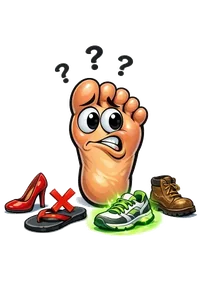
Before you read on. This article is general information, not medical advice. See a doctor promptly if something heavy landed on your foot, if a toe turns pale, blue or black, if numbness doesn't go away, or if pain wakes you at night. If you have diabetes or numb feet, check your feet every day. Boots can rub a sore you can't feel, and those need care right away.
Safety boots aren't optional on many job sites. But once you understand why they cause trouble, a few targeted changes can make a real difference.
What Is "Steel Toe Syndrome"?
"Steel toe syndrome" (or "steel cap toe syndrome") isn't a medical diagnosis. It's a name workers use for the toe pain, numbness, corns and nail trouble that come from the toe cap pressing on the toes. The usual reasons are a cap that's too short or too low for your toes, a boot that's the wrong size, or a foot that's wider than the boot. You're far from the only one. In a 1993 study by Marr and Quine, a podiatrist examined 321 workers in safety footwear. Nearly half complained of pressure from the steel cap, and most felt their boots had caused or worsened a foot problem.
The fix is usually the fit, not toughing it out. If your toes touch the cap, or the cap's edge digs across the top of your toes, that boot doesn't fit your foot. A cap that pinches today will still pinch next month, because the cap never softens.
Why Work Boots Cause Foot Pain
Little arch support. Most work boots come with thin, flat factory insoles. On hard floors, that leaves your arches and heels to take the load.
A cramped toe box. The safety cap sets a hard limit on room for your toes. If the boot is narrow, it squeezes the front of the foot. That can aggravate a Morton's neuroma (an irritated nerve between the toes), a bunion or a hammertoe you already have. It's also a common reason toenails get bruised, thickened or ingrown (Mayeaux and colleagues, 2019).
A stiff sole. Work boot soles are built for durability and puncture resistance, not flexibility. A 2017 review by Dobson and colleagues found that boot design changes the way people walk, and that safety boots are often designed for protection at the expense of comfort. A sole that won't bend where your foot bends can also load the ball of the foot as you push off.
Weight. Safety boots are much heavier than athletic shoes, and you lift them thousands of times a shift. Weight was one of the top complaints in the 1993 survey, alongside heat and stiff soles (Marr and Quine).
Concrete and hard floors. Concrete doesn't give. A review by Waters and Dick (2015) found good evidence that standing for long periods at work harms health, and that mats, better shoes and shoe inserts help. People who spend most of their workday on their feet are also more likely to develop plantar fasciitis, and so are people with tight calves (Riddle and colleagues, 2003).
The Most Common Work Boot Foot Problems
- Plantar fasciitis: heel and arch pain, often worst with the first steps in the morning.
- Metatarsalgia: aching or burning under the ball of the foot.
- Morton's neuroma: burning, tingling or numbness between the toes, most often between the third and fourth (Mak and colleagues, 2021).
- Ingrown toenails, and bruised or thickened nails from toes hitting the cap.
- Achilles pain at the back of the heel. How a boot's shaft and sole are built changes how your ankle moves (Dobson and colleagues, 2017).
- Pressure on the top of the foot from the laces, the tongue or the edge of the cap.
- General foot fatigue from heavy boots and hard floors.
If an ingrown toenail needs treatment, the recovery is easier than most people expect. Here's what walking looks like after ingrown toenail surgery.
Solutions That Actually Help
Replace the factory insoles. For many workers, this is a good first change. Take out the thin factory insole and try one with arch support and heel cushioning. In a study of assembly workers, standing on a mat, wearing insoles, or both was more comfortable than standing on a hard floor (King, 2002). Give a new insole a full workday before you judge it. When Anderson and colleagues (2020) tested insoles on people who stand all day at work, most changed their favorite after a full shift. If store-bought insoles aren't enough, custom orthotics made to fit your boots may help. Here's how custom orthotics compare with store-bought insoles.
Get boots that fit in length and width. Shop at the end of a workday, when your feet are largest, and wear your work socks. Leave about a thumb's width between your longest toe and the front of the boot, and make sure your toes aren't touching the cap. Don't just go up a size to get more width. In a study of coal miners, many wore boots much longer than their feet, likely because boots in their true length were too narrow (Dobson and colleagues, 2018). Look for a wide or extra-wide version that still meets the safety rating.
Consider a composite or alloy toe. Composite and alloy caps can carry the same safety rating as steel but weigh less, and composite caps often give the toes a little more room. The weight difference adds up over a long shift.
Break in new boots gradually. Don't wear new boots for a full shift on day one. Wear them a little longer each day until they feel right.
Stretch your calves. Tight calves are linked to plantar fasciitis (Riddle and colleagues, 2003). A few minutes of calf and arch stretching before and after a shift is an easy habit to start.
Rotate two pairs. If you can, alternate between two pairs so each one dries out between shifts. Heat and sweat were the most common complaint in the 1993 survey.
Take pressure off the top of your foot. If the laces or the tongue press on a sore spot, try skipping the eyelet right over it. Or loosen the laces across the top while keeping the ankle snug.
How to Choose a Comfortable, Supportive Work Boot
A lot of boot-related foot pain starts at the store, not the job site. Two pairs can meet the same safety standard and feel completely different a few thousand steps into a shift. The 2017 review by Dobson and colleagues found that boot design changes how people walk. A 2024 study by Arceri and colleagues found that workers walked more slowly in safety footwear than in sneakers, especially women, and most reported discomfort. Weight, poor fit and design were the likely culprits. So choose deliberately. Here's what to look at.
Steel, composite or alloy: pick the cap for your job, not out of habit. All three can carry the same ASTM F2413 safety rating, printed on a label inside the boot, so a properly rated composite cap isn't a weaker cap. Steel is the most compact but the heaviest, and it conducts cold, so your toes feel a chilly morning first. Composite caps (carbon fiber, fiberglass or hard plastic) are lighter, stay warmer and don't set off metal detectors. The material is thicker, so the toe of the boot is often built a little taller and roomier. Alloy caps split the difference: lighter than steel, slimmer than composite. One more thing: safety caps are built to take a serious impact once. If something heavy has already landed on that toe, replace the boot even if it looks fine.
Orthotic-friendly means a removable footbed and real depth. If you wear custom orthotics, or think you might need them, make sure the factory insole lifts out. The boot also needs enough depth that an orthotic won't push your foot up into the cap. Bring your orthotics when you try boots on. And squeeze the heel of the boot: a firm heel counter that doesn't collapse is what lets an orthotic hold your foot where it should be.
The boot should bend where your foot bends. Hold it at both ends and flex it. A supportive boot bends where your toes bend and resists twisting through the middle. That midfoot firmness helps on ladders, gravel and uneven ground. A boot that folds like a slipper gives you nothing, and one that won't flex at all fights every step. The crease should form behind the safety cap, not over your toes, because the cap never softens.
Lighter is easier, up to a point. Weight adds up: a few extra ounces per boot, lifted thousands of times, is real fatigue by the end of the week. Lightweight work boots with composite or alloy caps carry the same ratings, so you don't have to accept a heavy boot to stay safe. Just don't give up midfoot support, a firm heel counter or the sole your job needs.
Match the sole to your ground. Slip-resistant soles for wet or oily floors, deep lugs for mud and gravel, heat-resistant rubber near hot work. For some people, a slightly curved, rocker-shaped sole makes long hours on concrete easier than a completely flat one.
Your job requires boots. It shouldn't require foot pain. If the pain keeps coming back even with better boots and insoles, a podiatrist can find what's driving it and help you get the fit right.
Frequently Asked Questions
Can custom orthotics fit inside steel toe boots?
Yes. Custom orthotics can be made specifically for work boots, a little thinner and trimmed to fit the toe box. Take the factory insole out first to make room. Bring your boots to the fitting so the orthotic is built for the space you actually have. Many patients tell us the difference is worth it.
Are composite toe boots better for your feet than steel toe?
Composite toe boots are lighter than steel, which can mean less fatigue over a long shift. Some composite boots also have a slightly roomier toe box. Still, the biggest factors for your feet are overall fit, arch support and a good insole, not the cap material.
How often should I replace my work boots?
There's no fixed schedule. Boots can lose much of their cushioning and support long before the outside looks worn. Replace them if the midsole looks compressed or creased, the heel counter has gone soft, the tread is worn smooth, or new foot pain shows up in boots that used to feel fine. Replace them right away if something heavy has hit the toe cap.
Are lightweight work boots better for your feet?
Often, yes. Weight is one of the most common complaints about safety boots (Marr and Quine, 1993), and lighter composite or alloy caps meet the same impact ratings as steel. But weight isn't everything. A light boot with a floppy midfoot, a soft heel counter or the wrong sole for your job can hurt more than a heavier boot that fits and supports well.
What is steel cap toe syndrome?
It isn't a formal medical diagnosis. Workers use the term for toe pain, numbness, corns or nail trouble caused by the safety cap pressing on the toes. The cause is usually a boot that's too short, too narrow or too low in the toe for your foot. Getting the right length and width, or a boot with a roomier cap, usually matters more than anything else.
Can steel toe boots cause foot problems?
They can contribute. In a 1993 study by Marr and Quine, a podiatrist examined 321 workers in safety boots. Nine in ten had at least one foot problem, and most felt their boots caused it or made it worse. Common ones include heel pain, ball-of-foot pain, nerve irritation between the toes and nail problems. Good fit, good insoles and the right boot for your job help a lot.
Why do steel toe boots hurt my toes?
Usually because the cap is pressing on them. The boot may be too short, too narrow or too low in the toe for your foot, or your toes may slide forward into the cap on slopes and ladders. Check that your toes don't touch the cap, lace the boot snugly over the instep so your foot doesn't slide, and consider a wider boot or a roomier composite cap.
Can steel toe boots cause toenail problems or ingrown toenails?
They can. Toes that hit or rub the cap can end up with bruised, black or thickened nails. Pressure from tight footwear is also a common reason nails become ingrown, along with how the nails are trimmed (Mayeaux and colleagues, 2019). Trim your nails straight across, make sure your toes aren't jammed into the cap, and see us if a nail is painful, red or draining.
Why do my work boots hurt the top of my foot?
Usually from pressure: laces pulled too tight, a stiff tongue, or the edge of the cap pressing where your foot bends. Try loosening the laces across the top, skipping the eyelet over the sore spot, or a boot with more room over the instep. Pain on top of the foot that doesn't ease, or that comes with swelling after a long shift, is worth an exam.
Can work boots cause Achilles tendonitis?
There's little research on work boots and the Achilles specifically. But how a boot's shaft and sole are built changes how your ankle moves (Dobson and colleagues, 2017), and a stiff collar can rub the back of the heel. If the back of your heel hurts, check where the boot rubs, keep your calves flexible, and get it checked if it doesn't settle.
Do steel toe boots cause bunions?
There's no good evidence that shoes on their own cause bunions. A systematic review found the link between footwear and bunions unclear (Nix and colleagues, 2012). But a narrow boot can press on a bunion you already have and make it hurt. A wider boot or a roomier cap usually helps.
Can work boots cause heel pain or plantar fasciitis?
Long hours on your feet are part of the picture. In a 2003 study by Riddle and colleagues, people who spent most of their workday on their feet were more likely to have plantar fasciitis, and so were people with tight calves. Supportive insoles, calf stretching and boots with a firm heel counter can help. Heel pain that lasts more than a few weeks deserves an exam.
Ready to Feel Better?
Most patients are seen within a few days. Schedule your visit today.