“I highly recommend this place — everyone is really nice and they make sure you feel comfortable.”Google · Kimberly Manilla · Mar 2026
“Podiatrist is very knowledgeable and approachable. Staff is professional and proactive.”Google · Ben C · Feb 2026
“His professional expertise and kind demeanor made my treatment feel effective and comfortable.”Google · Cecil Lynn Farrar · Feb 2026
“Every time I come with pain I leave this place feeling great!”Google · Wendy Aguilar · Nov 2024
“A front office that runs smoothly — you know the doctor MUST be a true professional.”Google · Jerika Steele · Oct 2023
“This is the greatest doctor I've ever met — professional, polite, and knows what he does.”Google · Don Jair Casas · Dec 2025
“Dr. P, Ms. Theresa, and Ms. Maria are some of the kindest people you'll ever meet.”Google · Charles Ward · Jan 2026
“Staff was friendly and helpful. Clear instructions and a plan for recovery.”Google · Maurico Payne · Jan 2026
“The best foot doctor I have found in 40 years.”Google · Dwight Herkness · Aug 2019
“I wish I could give Dr. Patish 10 stars!!! He has literally been a life changer.”Yelp · Troy E. · Aug 2019
“Thank you Dr. Patish for taking great care of my parents!”Google · Elizabeth Naranjo · Feb 2026
“He is amazing — truly cares about my quality of life.”Healthgrades · Mar 2019
Brooks vs New Balance for Men: How They Compare and Which to Try
A podiatrist explains how Brooks and New Balance differ in fit, width and support, and which men's models we would try first for work, walking and long days on hard floors.
Ask a group of men what they wear for work and weekend errands. Two names keep coming up: Brooks and New Balance. Both companies make reliable everyday shoes. Neither one is right for every foot. The better choice is whichever one fits yours.
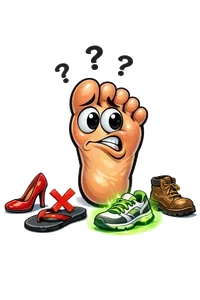
Before you read on. This article is general information, not medical advice. If you have diabetes, numb feet or poor circulation, a shoe that rubs can cause a wound you may not feel. Check your feet every day, and have your feet and shoes checked by a podiatrist before you rely on anything here. If a shoe hurts, stop wearing it.
The two brands do differ in important ways. They build support differently, they offer different width ranges, and their cushioning feels different. This guide explains those differences first. Then it pairs up men's models worth trying, one from each brand, so you can compare them side by side.
Brooks vs New Balance at a Glance
| Feature | Brooks | New Balance |
|---|---|---|
| Men's widths | Narrow to extra-wide on most core models | Extra-narrow to extra-wide; a few walking shoes go wider still |
| How support is built | Guide rails: firmer foam along both sides of the heel | Firmer foam on the inner side, or a firm heel post in walking and motion-control shoes |
| Heel height | Most everyday trainers sit higher at the heel | Newer trainers like the 860, 1080 and More sit lower; the 990 and walking shoes sit higher |
| Cushioning feel | Balanced and a little firm; plusher in the Glycerin | From steady (880, 860) to very soft (1080) |
| Leather walking shoe | Addiction Walker | 928 |
| Unisex sizes | The models in this guide come in men's and women's versions | Many classic sneakers are sold in unisex sizes, which follow the men's scale |
If you already own a pair that still feels comfortable at the end of a shift, start with that model. It tells you more than any chart.
Fit and Width: Where the Brands Differ Most
A shoe that fits matters more than the logo on the side. Buldt and Menz (2018) reviewed the research on shoe fit. In that review, between 63 and 72 percent of people wore shoes that didn't match the length or width of their feet. Poor fit was linked to foot pain.
Too narrow is a common mistake. In a study of older adults, Menz and Morris (2005) found that shoes narrower than the foot were linked to corns, bunions and foot pain. Many men buy their usual size and never consider width.
Both brands sell most of their everyday men's shoes in several widths. Brooks makes most of its core models in narrow, medium, wide and extra-wide. New Balance covers more ground on some models, from extra-narrow to extra-wide. A few of its walking shoes come wider still.
Watch the letters carefully. In men's shoes, D is the standard width, 2E is wide and 4E is extra-wide. Women's shoes use the same letters differently, so a women's D is a wide. If you ever shop the women's section for a narrow foot, Brooks's size guide says to go by the width name, not the letter.
Brooks also notes that its narrow, medium and wide versions share the same footbed and differ in the upper. Its extra-wide version has a wider base. So if your foot spills over the edge of the insole, or your orthotic is wide, try the extra-wide.
A few habits help with either brand:
- Shop late in the day. Feet swell as the day goes on.
- Measure both feet while standing. Fit the bigger one.
- Leave a thumb's width in front of your longest toe. That toe isn't always the big toe.
- Bring your orthotics and your work socks. Both change the fit.
- Walk around the store. Your heel should stay put, and nothing should rub.
Support: Guide Rails or a Firmer Inner Side
Both brands make neutral sneakers and supportive sneakers, but they build the support differently.
Brooks uses what it calls guide rails, which are firmer walls of foam along both sides of the heel. Brooks says the rails limit how far the heel rolls in or out, to cut down on extra twisting at the ankle and knee. You'll find them in the Adrenaline GTS, the Glycerin GTS and the Beast GTS.
New Balance's support trainer, the 860, uses firmer foam and a stiff layer on the inner side to slow how far the foot rolls inward. Its motion-control and walking shoes go further. The 1540 and the 928 add a firm post in the heel.
Does the extra support actually help? The research gives a mixed answer. Knapik and colleagues (2010) found that matching shoes to arch shape didn't reduce injuries in Marine recruits. In a 2016 trial, Malisoux and colleagues gave 372 recreational runners either a standard shoe or a motion-control version of the same shoe. The motion-control group had fewer injuries, mainly among runners whose feet rolled inward.
Willems and colleagues (2021) took a second look at that trial. They focused on problems often blamed on rolling in, such as heel pain, Achilles pain, shin pain and pain at the front of the knee. Those were less common in the motion-control shoes. On the other hand, Nielsen and colleagues (2014) followed 927 new runners in neutral shoes for a year. Runners whose feet rolled inward a little were not injured more often than the others.
Our practical take is simple. If your feet roll inward a lot, or a supportive shoe simply feels better, wear it. If a neutral shoe feels good and your feet don't hurt, you don't need to force a supportive shoe. If you wear custom orthotics, a neutral shoe with a firm heel usually works well. The orthotic is already doing the guiding.
Cushioning and Heel Height
Brooks sneakers tend to feel balanced and a little firm underfoot, with plusher cushioning in the Glycerin. New Balance runs from steady in the 880 and 860 to very soft in the 1080. Soft foam feels wonderful in the store. What really matters is how your feet feel after a long shift.
Comfort turns out to be a valuable guide. Nigg and colleagues (2015) reviewed years of running-shoe research and proposed a simple idea they called the comfort filter. People tend to choose the shoe that feels best, and that shoe usually works for them.
Heel height is the other major difference. Drop is how much higher the heel sits than the ball of the foot inside the shoe. Most of Brooks's everyday trainers sit higher at the heel than New Balance's newer trainers.
Is one heel height better than another? Not on its own. In a randomized trial of 553 leisure runners, Malisoux and colleagues (2016) found that overall injury risk was about the same with a high, medium or zero heel drop. Regular runners did worse in the medium- and zero-drop shoes, though, while occasional runners did better.
Ryan and colleagues (2014) assigned 103 runners to a regular shoe or one of two minimalist shoes. The minimalist groups had more injuries, and one of them reported more shin and calf pain. Minimalist shoes differ from regular trainers in more than heel height. Still, it's a reason for caution: if you've worn a higher heel for years, move to a much lower one slowly.
That matters most if your Achilles tendons or calves are already sore. A sudden switch to a much lower heel can put more strain on them. If that describes you, a trainer with a higher heel, such as the Ghost or the Adrenaline GTS, may feel kinder at first.
Unisex Sizes: Good News for Men
Many New Balance classics, like the 990 and the 2002R, are sold in unisex sizes. You'll often see a U at the start of the model code. Unisex sizes follow the men's scale, so your usual men's size is the place to start.
The fit can still change from one model to the next, and even between versions of the same model. Try them on, check the width letter, and walk around before you buy.
Brooks and New Balance Shoes for Men to Try
No shoe company pays for placement here. No brand sponsors this article. Every shoe here is our own pick, based on the features above and on what we see in the office.
We do run a separate website, footshop.cc. Patients kept asking where to find the products we talk about in the exam room. So we built a separate site that keeps the links in one place. It includes links to Amazon and other retailers. Every affiliate link over there is disclosed where it appears. If you buy through one of those links, we earn a small commission. It costs you nothing extra. We run it as a convenience for our patients, not as a condition of care. You are free to buy any of these shoes anywhere you like, at whatever price you find, with or without our links. Our advice is the same either way.
Medical footwear is not part of that. Prescription shoes, inserts, boots and braces are never on our affiliate site. They are not a shopping link, and we will not treat them like one.
Checked in October 2026. Shoe companies change their models often. That's why we list model lines, not version numbers, and leave out prices. Check sizes and widths on the brand's own website before you buy, and try the shoe on with your orthotic in it if you wear one.
We've paired the shoes by purpose, so you can try one of each and compare.
Neutral Daily Trainers: Brooks Ghost or New Balance 880
- Brooks Ghost: Smooth, steady and a little firm. Sold in several widths.
- New Balance Fresh Foam X 880: A dependable neutral shoe, sold in a wide range of widths.
Both are sensible first choices for work, walking and errands. Try them back to back and choose whichever holds your heel better.
Plush Cushioning: Brooks Glycerin or New Balance 1080
- Brooks Glycerin: Brooks's plush everyday trainer. The Glycerin GTS adds guide rails.
- New Balance 1080: Very soft and light, with a lower heel.
If your feet roll inward, or very soft foam makes you feel unsteady, the Glycerin GTS or the 860 is the steadier choice.
Mild to Moderate Support: Brooks Adrenaline GTS or New Balance 860
- Brooks Adrenaline GTS: Guide rails on both sides and a higher heel. Sold in several widths.
- New Balance Fresh Foam X 860: A firmer inner side and a lower heel. Sold in several widths.
Both suit men whose feet roll inward, or who simply feel steadier in a supportive shoe. Some prefer the guide-rail feel, and others the firmer inner edge.
Maximum Support: Brooks Beast GTS or New Balance 1540
- Brooks Beast GTS: Brooks's most supportive men's shoe, with a wide base and a roomy fit for orthotics. Sold in medium, wide and extra-wide.
- New Balance 1540: A motion-control shoe with a firm heel post and extra depth for orthotics.
These suit feet that roll inward a lot, bigger frames, and men who wear a bulky custom orthotic. Both feel heavier than a regular trainer.
Extra Cushion and a Rocker Sole: Brooks Ghost Max or New Balance More
- Brooks Ghost Max: Thick cushioning, a rocker-shaped sole and a lower heel than the Ghost. Worth a try if you have heel pain or a stiff big toe.
- New Balance Fresh Foam X More: Very thick and wide, with a low heel. Stable for its height.
A rocker sole is curved, so the shoe rolls you forward instead of making your toes bend as much. Menz and colleagues (2016) ran a randomized trial in 102 people with arthritis in the big-toe joint. Rocker-sole shoes and shoe inserts eased their pain by a similar amount. The rocker group wore their shoes less and reported more side effects. In the same patients, the rocker shoes lowered pressure under the big-toe joint, the ball of the foot and the heel.
Leather Walking Shoes: Brooks Addiction Walker or New Balance 928
- Brooks Addiction Walker: A leather walking shoe with firm support along the inside and a removable insole. Sold in several widths.
- New Balance 928: A leather walking shoe with a firm heel post and a removable footbed. Sold in several widths, including extra-wide, and in a hook-and-loop version if laces are hard on your hands.
Both are built for long days of walking or standing. Both feel heavier and stiffer than a running shoe, which many people find steadying.
Unisex Sneakers and Everyday Classics
- New Balance 990: The classic gray sneaker, with a firm heel, a higher heel height and a removable insole. Sold in many widths. Of the classics, it's the one we'd choose for a full day on your feet.
- New Balance 2002R: A retro running look with running-shoe cushioning underneath. Firmer than the trainers above. Fine for errands and travel, and often sold in unisex sizes.
- New Balance 9060: Soft and chunky. The wide, flared sole feels stable to some people and clumsy to others.
- New Balance 550: Fashion first, with a firm court-shoe sole and little cushioning. Fine for short outings, not for a long shift.
The Brooks shoes in this guide come in separate men's and women's versions, so there's no unisex size to convert.
If You Have a Foot Problem Already
Long days standing on hard floors: a review by Waters and Dick (2015) linked prolonged standing at work to leg pain, tiredness and discomfort. It also listed better shoes and shoe inserts among the measures that may help. A cushioned trainer or a walking shoe with a firm heel is a good start. Our guide to standing all day at work has more tips.
Heel pain: a cushioned shoe with a firm heel counter often helps. The Ghost Max, the More and the Glycerin are good places to start. If the pain has lasted more than a few weeks, read our guide to heel pain that won't go away and come in.
Flat feet or feet that roll in: start with the Adrenaline GTS or the 860, and step up to the Beast GTS or the 1540 if you need more. A neutral shoe with an orthotic works well for many men too. Our flat feet shoe guide covers this in detail.
Stiff big toe or pain in the ball of the foot: a rocker sole like the Ghost Max or the More can take pressure off the front of the foot. Read more about a stiff big toe and ball-of-foot pain.
Balance worries: Menant and colleagues (2008) reviewed the research on footwear and falls in older adults. They recommend shoes with low heels and firm, slip-resistant soles, both indoors and out. Very thick, soft soles can feel wobbly. If balance is a concern, the Ghost, the 880 or a walking shoe may be a steadier pick than the Ghost Max or the More.
Diabetes or numb feet: an international guideline on preventing foot ulcers in diabetes (Bus and colleagues, 2024) advises people at risk to wear properly fitting shoes. It also advises them never to walk without suitable foot protection. Seams, tight toe boxes and worn insoles can injure skin you can't feel. Have us check your shoes with you.
When to See a Podiatrist
See a podiatrist if a new shoe causes pain that doesn't settle within a short break-in period. Come in, too, if you have heel pain in the morning, numbness or tingling in your toes, or a bump that keeps growing. A blister or sore that won't heal needs a visit as well. Those are not shoe problems alone, and the right shoe is only part of the answer.
For more help choosing, read our guides to everyday athletic shoes for men and narrow athletic shoes that fit orthotics. If you're shopping for a woman in your life, see our Brooks vs New Balance guide for women.
Frequently Asked Questions
Is Brooks or New Balance better for standing on concrete all day?
Neither brand wins outright. For long days on hard floors, look for steady cushioning, a firm heel counter and a shoe that fits well at the end of your shift. The Brooks Ghost or Glycerin and the New Balance 880 or 1080 are good starting points, and the leather walking shoes from both brands work well too.
Which brand is better for wide feet?
Both sell many men's shoes in wide and extra-wide. New Balance covers a broader range on some models, and a few of its walking shoes come wider than extra-wide. In men's shoes, D is standard, 2E is wide and 4E is extra-wide.
Should I try the Brooks Ghost or the New Balance 880?
Try both. They are neutral, cushioned trainers that work well for everyday wear, and both come in several widths. The Ghost feels smooth and a little firm. The main differences between the two are fit and feel, and those shift a little with each new version. Choose the one that holds your heel better.
Who should wear the Brooks Beast GTS or the New Balance 1540?
These are the most supportive trainers from each brand. They suit men whose feet roll inward a lot, men with bigger frames, and anyone who wears a bulky custom orthotic. Both are heavier than a regular trainer. If a lighter supportive shoe works for you, the Adrenaline GTS or the 860 may be enough.
Are New Balance 990s good for walking all day?
For many men, yes. The 990 has a firm heel, a removable insole and a wide range of widths. It sits higher at the heel than many newer trainers, so if you're used to a lower shoe, give your calves a little time to adjust.
Which of these shoes work with custom orthotics?
Look for a removable insole, a firm heel counter and enough room over the top of your foot. Every trainer and walking shoe on our list has a removable insole. The Brooks Beast GTS and the New Balance 1540 have extra room for bulkier orthotics. Take the factory insole out and try the shoe with your orthotic in it.
Are fashion sneakers like the New Balance 550 or 9060 good for work?
Not usually. The 550 has a firm court-shoe sole with little cushioning, and the 9060 is soft but bulky. They're fine for short outings. For a long shift, choose a cushioned trainer or a walking shoe from the lists above. Of the classics, the 990 is the one we'd pick for a full day.
When should I see a podiatrist instead of buying new shoes?
If you have diabetes, numb feet or poor circulation, come in before you buy. The same goes for heel pain that lasts more than a few weeks, a bunion that's getting worse, or a sore that won't heal. The right shoe helps, but it's only part of the answer in those cases.
Ready to Feel Better?
Most patients are seen within a few days. Schedule your visit today.