“I highly recommend this place — everyone is really nice and they make sure you feel comfortable.”Google · Kimberly Manilla · Mar 2026
“Podiatrist is very knowledgeable and approachable. Staff is professional and proactive.”Google · Ben C · Feb 2026
“His professional expertise and kind demeanor made my treatment feel effective and comfortable.”Google · Cecil Lynn Farrar · Feb 2026
“Every time I come with pain I leave this place feeling great!”Google · Wendy Aguilar · Nov 2024
“A front office that runs smoothly — you know the doctor MUST be a true professional.”Google · Jerika Steele · Oct 2023
“This is the greatest doctor I've ever met — professional, polite, and knows what he does.”Google · Don Jair Casas · Dec 2025
“Dr. P, Ms. Theresa, and Ms. Maria are some of the kindest people you'll ever meet.”Google · Charles Ward · Jan 2026
“Staff was friendly and helpful. Clear instructions and a plan for recovery.”Google · Maurico Payne · Jan 2026
“The best foot doctor I have found in 40 years.”Google · Dwight Herkness · Aug 2019
“I wish I could give Dr. Patish 10 stars!!! He has literally been a life changer.”Yelp · Troy E. · Aug 2019
“Thank you Dr. Patish for taking great care of my parents!”Google · Elizabeth Naranjo · Feb 2026
“He is amazing — truly cares about my quality of life.”Healthgrades · Mar 2019
Golf Shoes for Men That Fit Orthotics: Wide, Narrow, Flat Feet, High Arches and Every Age
Spiked or spikeless, wide or narrow, walking or riding: a podiatrist explains how to choose a men's golf shoe that holds your orthotic and suits your feet, from the high-school team to the senior league.
Golf asks a lot of your feet. You walk for hours, often on slopes and wet grass. Then, dozens of times a round, you plant your lead foot and twist hard against it. A golf shoe has to handle both jobs. If you wear custom orthotics, it also has to make room for them. Most golf shoes are built low and flat inside, which is exactly where an orthotic runs into trouble.
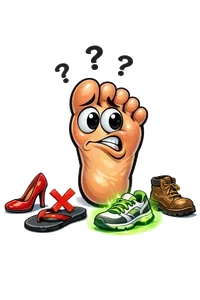
Before you read on. This article is general information, not medical advice. If you have diabetes, numb feet, poor circulation or a history of foot ulcers, a shoe that rubs can cause a wound you may not feel. Have your feet and your golf shoes checked by a podiatrist before you rely on anything here. If a shoe hurts, stop wearing it. Nothing in this guide is a promise about pain, scores or injury.
This guide is for men. It covers wide and narrow feet, flat feet, high arches and ankles that give way. It explains what the research says about spikes, and it walks through the shoe features that let an orthotic sit properly. Then it looks at age and level, from the high-school golfer to the man who still walks nine holes at eighty. We have a separate guide for women and one for junior and varsity boys.
Why Golf Is Harder on Feet Than It Looks
A golf swing loads the two feet very differently. Worsfold and colleagues (2009) measured force and twisting under the shoes of 18 golfers hitting drives on real grass. The lead foot is the one closest to the target. It took the higher vertical force and the higher torque, no matter which shoe they wore. Your back foot pushes off. Your lead foot takes the hit and resists the twist.
Weight transfer is not one fixed pattern, either. Ball and Best (2007) studied 62 golfers from professionals to high handicappers and found two normal styles. One group kept moving pressure toward the front foot through contact. The other shifted it back toward the trail foot at impact. Both styles showed up at every skill level. So your feet may load differently from your playing partner's, and both can be fine.
Then there is the walking. Kobriger and colleagues (2006) put pedometers on 42 golfers who walked 18 holes on three public courses. They averaged 11,948 steps per round. That is a long walk on uneven ground with a bag. And it happens in a shoe designed mainly for the swing.
Injuries follow. McHardy and colleagues (2007) followed 588 amateur golfers for a year and recorded 15.8 injuries per 100 golfers. The lower back came first, then the elbow and forearm, and the foot and ankle accounted for 12.9 percent of injuries in that study. A 2024 meta-analysis by Kuitunen and Ponkilainen pooled seven studies and found about 2.5 injuries for every 1,000 rounds of 18 holes. Golf is low-risk compared with contact sports, but the feet and ankles do get their share.
Emergency-room data tell the rest of the story. Nishi and colleagues (2025) reviewed ten years of golf-related leg and foot injuries seen in U.S. emergency departments. Nearly half the patients were over 60. The knee was the most common body part, followed by the lower leg, the ankle and the foot. The single biggest cause was not the swing at all. Golf carts accounted for 40 percent of the injuries in that review. We come back to that in the senior section.
Spiked or Spikeless: What the Research Actually Shows
Metal spikes used to be standard. Most courses now ban them, and soft plastic spikes or molded spikeless soles have taken over. Golfers argue about which grips better. The lab work is calmer than the arguments.
Worsfold and colleagues (2007) had 24 golfers hit shots in three shoes. One had traditional metal spikes, one had soft alternative spikes, and one was flat-soled with no added traction. Peak vertical forces were about the same in the metal and the alternative spike shoes. The coefficient of friction was 0.62 under both feet, whatever shoe or club was used. The same group (2008) measured twisting force where the shoe meets the grass. Metal and alternative spikes showed no significant difference on any torque measure in that study. The metal spike shoe did allow more back-foot torque than the flat sole when hitting a driver. Gatt and colleagues (1998) looked at knee loads in 13 golfers hitting a five iron in spiked and spikeless shoes. The peak knee loads were not significantly affected by shoe type.
Here is how we read that. A sole with real traction, spiked or a good spikeless design, holds the ground better than a smooth one. Between spiked and well-made spikeless shoes, no study has shown a difference in injury or in scores. There is no research showing that a particular shoe adds yards or lowers your handicap. If a brand claims that, treat it as marketing.
What matters more is where and how you play:
- Soft spikes bite into wet grass and steep lies. They are the usual choice for early tee times, hilly courses and competitive rounds. They wear down and should be replaced when the edges round off.
- Spikeless soles are lighter, flex more, and walk comfortably from the parking lot to the 19th hole. On soaked grass or firm side-hill lies, some men feel them slip a little.
- Whatever you pick, the traction pattern is less important than fit. A shoe that slides on your foot loses more stability than a shoe that slides a little on the turf.
Check your course's policy before you buy spiked shoes. Many clubs allow only soft spikes, and some ask for spikeless on the greens.
Can Orthotics Help Your Golf?
The honest answer is: maybe, and the research is thin. In a small 2000 study, Stude and Gullickson had 12 experienced golfers wear custom flexible orthotics every day for 6 weeks. In that study, club-head velocity rose by roughly 3 to 5 miles per hour, up to about 7 percent. The orthotics also blunted the fatigue effect of nine simulated holes. A follow-up study by the same authors (2001) found the orthotics changed stride length and pelvic rotation during walking. Both studies were tiny and had no control group, so treat them as a hint, not proof.
The stronger evidence is about injury in general. Bonanno and colleagues (2017) pooled randomized trials on foot orthoses for injury prevention. In that review, contoured orthoses lowered the risk of overall injuries and stress fractures, with a relative risk of 0.72 for all injuries. Flat shock-absorbing insoles did not. Those trials were mostly in military recruits, not golfers. Still, the message is consistent: a contoured device under a foot that needs one can lower the odds of an overuse problem.
What orthotics reliably do in golf is practical. They hold a flat or tired foot in a steadier position for hours of walking. They spread pressure under a sore heel or a sore ball of the foot. And they give the lead foot a firmer platform to resist that twist. None of that works if the orthotic rattles around inside a shallow shoe.
What Makes a Golf Shoe Work With an Orthotic
Golf shoes are low-volume by design. The upper is snug for control. The footbed is thin and often glued in. Waterproof linings take up space. So an orthotic that fits your sneaker may not fit your golf shoe at all. Look for these things:
- A removable insole. Pull it out before you buy. If it is glued down, the shoe is a poor match for a custom device.
- Depth. With the factory insole out and your orthotic in, your heel should sit down inside the counter, not perched on top of it.
- A firm heel counter. Squeeze the back of the shoe. It should not fold. The counter cups the orthotic and keeps your heel from sliding.
- A flat footbed and a straight-ish last. A built-in arch bump fights the orthotic. A strongly curved shoe twists it.
- Width where you need it. An orthotic adds volume mainly at the arch and heel. Many men go up one width to make room.
- Lacing or a dial that lets you adjust. Extra eyelets or a dial closure let you lock the heel without crushing the forefoot.
Bring your orthotics and your golf socks when you try shoes on. Fit matters more than you may think. Buldt and Menz (2018) reviewed the research on shoe fit. In that review, between 63 and 72 percent of people wore shoes that did not match the length or width of their feet. Poor fit was linked to foot pain and to problems in the toes.
Match the Shoe to Your Foot
Wide Feet
Golf is one of the better sports for wide feet, because the biggest golf brand sells widths. FootJoy's men's shoes come in narrow, medium, wide and extra-wide. By the company's own fitting chart, its extra-wide runs close to a 3E. New Balance makes several golf shoes in standard, wide and extra-wide, including a true 4E. Adidas sells its flagship spiked shoe in a wide version. If your foot spills over the edge of the insole, go up a width, not a length. A longer shoe puts the flex point behind your toes and makes the shoe fold in the wrong place during your follow-through.
Narrow Feet
A narrow foot in a medium golf shoe slides on every swing. FootJoy stocks several models in narrow, though the color choice is thinner. A dial closure can help, because it tightens the whole forefoot evenly. Our guide to narrow athletic shoes that fit orthotics covers heel-lock lacing, which works in golf shoes too. A tongue pad or a thin heel grip can take up a little extra room.
Flat Feet or Feet That Roll In
Flat feet get tired on a long walk and tend to roll inward on side-hill lies. Many men assume they need a shoe with a tall built-in arch. Usually they do better with a firm, flat golf shoe and their own orthotic. The research supports a flexible view of this. Knapik and colleagues (2014) pooled three military trials and found that assigning running shoes by arch type did not change injury rates. Neal and colleagues (2014) reviewed prospective studies. A rolled-in foot posture was a risk factor for shin pain, though the effect was small. Our flat-feet shoe guide goes deeper.
High Arches
A high, stiff arch absorbs shock poorly and tends to load the outside of the foot. Williams and colleagues (2001) compared high-arched and low-arched runners. The high-arched group reported more ankle injuries, more bone-related injuries and more injuries on the outer side. In golf that shows up as outside-heel pain and a lead ankle that rolls on uneven lies. A cushioned sole, a wider base and a firm heel help. For a painful high arch, Burns and colleagues (2006) showed in a randomized trial that custom orthoses reduced foot pain. That is a conversation to have with us before you buy.
Unstable Ankles
The lead ankle rotates hard at impact and follow-through. If you have sprained that ankle before, you know the feeling of it giving way on a slope. Gribble and colleagues (2016) reviewed the literature for the International Ankle Consortium. Sprains recur often, and a large share of people go on to chronic ankle instability. A shoe can help by giving you a firm heel counter, a wide, low sole and a secure closure. A shoe cannot do what a brace or rehab does. Dizon and Reyes (2010) pooled seven trials. Ankle braces cut sprain risk by about 69 percent in previously injured athletes in that review, and tape did about the same. If your ankle keeps rolling, read our guides on ankle sprains and strengthening after a sprain, and come in.
Heel Pain and Plantar Fasciitis
Nothing finds a sore heel like walking 18 holes. A cushioned spikeless shoe with a firm counter is usually kinder than a stiff, flat spiked shoe. Whittaker and colleagues (2018) reviewed trials of foot orthoses for plantar heel pain and found a modest benefit in the medium term. Pair the shoe with your orthotic and warm up your calves. If the pain lingers, read our guide to heel pain that won't go away.
Stiff or Painful Big Toe
Your lead foot rolls up onto the big toe at the finish. A stiff big-toe joint hates that. A shoe with a firmer forefoot and a slightly rounded sole can roll you through instead of bending the joint. Menz and colleagues (2016) ran a randomized trial in people with arthritis of the big-toe joint. Rocker-sole shoes and orthoses eased pain by a similar amount. Read more about a stiff big toe.
Diabetes or Numb Feet
An international guideline on preventing foot ulcers in diabetes (Bus and colleagues, 2024) is clear. People at risk should wear properly fitting shoes at all times. A seam over a toe, or a sock that bunches on the back nine, can open skin you cannot feel. See us before you buy, and check your feet after every round. Our daily foot checklist is a good habit.
Golf Shoes by Age and Level
Junior and High-School Golfers
Teenage feet are still growing, and growing feet get stuffed into shoes bought "to grow into." Klein and colleagues (2009) measured children's feet and shoes. Shoes that were too short went along with a greater sideways tilt of the big toe. Lee and colleagues (2026) surveyed elite adolescent golfers and found that the ankle was one of the most common injury sites. Growth, widths and when a young golfer needs an orthotic are all covered in our guide to junior golf shoes for boys.
Competitive and Low-Handicap Men
If you compete, traction and heel hold come first. Worsfold and colleagues (2008) found that low-handicap golfers generated significantly more back-foot torque with a driver than mid or high handicappers. Better players load the ground harder. A spiked shoe with a snug, locked heel gives that force somewhere to go. Many strong players keep a spiked pair for competition and wet mornings and a spikeless pair for practice days. Replace worn spikes before an event, and do not break in new shoes on tournament day.
Recreational Golfers
If you play for the walk and the company, comfort wins. Parkkari and colleagues (2000) ran a controlled trial with sedentary middle-aged men. In that trial, one group was asked to play golf two or three times a week for 20 weeks. The golfers improved their aerobic fitness, lost weight and raised their good cholesterol, with few injuries. Murray and colleagues (2017) reviewed more than 300 studies and reached a similar view: golf provides moderate physical activity with real health benefits. Pick the shoe you can walk 18 holes in. For most recreational men that is a cushioned spikeless shoe with room for an orthotic. Keep a spiked pair only if your home course is hilly or often wet.
Senior Golfers
Golf is good for older men. Tsang and Hui-Chan (2004) compared experienced elderly golfers with other older men. The golfers had better knee-joint position sense and better balance control, close to that of young adults. The flip side is that balance still fades with age. Wilson and colleagues (2026) tested recreational golfers over 80. Their dynamic balance was lower than that of golfers aged 65 to 79, so the authors recommended balance training on top of golf.
So the senior golf shoe is first a fall-prevention shoe. Menant and colleagues (2008) reviewed footwear for older people at risk of falls. They recommended a low heel and a firm, slip-resistant sole. Kim and Hegazy (2024) reached the same points in their review. They list a proper fit, secure fastening, a modest heel, a supportive collar and a sole that grips. For golf that means:
- A spikeless or soft-spiked shoe with a wide, stable base and a firm heel counter.
- A light shoe. A heavy waterproof boot tires the legs on the back nine.
- A dial closure if your hands are stiff. A shoe you cannot tighten is a shoe that slips.
- Cushioning for the walk, but not a tall, squishy sole that feels wobbly on slopes.
- Room for an orthotic if you wear one, and a sock that does not bunch.
Two more things. First, golf carts. In the review by Nishi and colleagues (2025), carts caused 40 percent of the golf-related leg and foot injuries seen in emergency departments. Golfers over 60 made up nearly half of all patients in that study. McGwin and colleagues (2008) reported the same pattern years earlier. Keep both feet inside the cart until it stops, and do not step out onto a slope in a slick-soled shoe. Second, Menz and colleagues (2006) followed older adults for a year. Walking around indoors barefoot or in socks was linked to more falls. Change out of your golf shoes into real house shoes, not socks, when you get home. Our fall-prevention guide has more.
Men's Golf Shoes to Try
No shoe company pays for placement here. No brand sponsors this article. Every shoe here is our own pick, based on the features above and on what we see in the office.
We do run a separate website, footshop.cc. Patients kept asking where to find the products we talk about in the exam room. So we built a separate site that keeps the links in one place. It includes links to Amazon and other retailers. Every affiliate link over there is disclosed where it appears. If you buy through one of those links, we earn a small commission. It costs you nothing extra. We run it as a convenience for our patients, not as a condition of care. You are free to buy any of these shoes anywhere you like, at whatever price you find, with or without our links. Our advice is the same either way.
Medical footwear is not part of that. Prescription shoes, inserts, boots and braces are never on our affiliate site. They are not a shopping link, and we will not treat them like one.
Checked in November 2026. We confirmed widths and insole details on the makers' and major golf retailers' own pages. Shoe companies change models every season, so we list model lines, not version numbers, and leave out prices. Width and color availability varies by store. Check the brand's site before you buy, and try the shoe on with your orthotic in it.
Wide and Extra-Wide Feet
- New Balance 997 Golf (spiked): standard, wide and extra-wide, up to 4E. The spikeless 997 is listed in standard and 4E and comes with a removable cushioned insole.
- New Balance Fresh Foam Contend v2 (spikeless) and New Balance 574 Greens (waterproof, with a two-year waterproof warranty): both sold in standard, wide and extra-wide.
- FootJoy in extra-wide: the Pro/SL, Fuel and Quantum spikeless lines, the HyperFlex, and the Premiere Series Packard and Field. By FootJoy's chart, extra-wide runs close to a 3E. The Traditions comes only in medium and wide.
- Under Armour Drive Pro: sold in a 2E wide version, laced or with a dial closure, with a waterproof membrane.
- Nike sells a wide version of several golf shoes, including the Victory Tour and the Pegasus golf shoe. Its sizing is unisex and its wide is one step up from regular.
- Puma IGNITE Elevate and Fusion Crush Sport (spikeless): medium and wide.
- adidas Tour360 (spiked): the current model is sold in a separate wide version.
Only New Balance is confirmed in a true 4E. For a very wide foot, start there.
Narrow Feet
- FootJoy makes the Pro/SL, Fuel, Quantum, HyperFlex and Premiere Series lines in narrow, where a store stocks them. Ask; many carry only medium and wide.
- If narrow is not available, a dial-closure shoe in medium plus heel-lock lacing on a laced shoe is the next move.
Confirmed Removable Insoles for an Orthotic
- ECCO Biom H4, Biom C4, Biom H5 and Biom Tour: ECCO states the inlay sole is removable, and for the H5 it notes that taking it out adds width. Several are fully waterproof. Sold in one width in the U.S., so the removable insole is how you make room.
- New Balance 997 Spikeless: listed with a removable cushioned insole, in standard and 4E.
- Skechers GO GOLF Max and GO GOLF Arch Fit (spikeless): listed with a removable insole. The built-in arch shape is firm, so test your orthotic in them before you commit.
For every other shoe on this page, lift the insole in the store. If it comes out cleanly and your orthotic sits flat, you are in business.
For Competition and Wet Mornings
- FootJoy HyperFlex, FootJoy Premiere Series, adidas Tour360 and Nike Victory Tour for soft spikes with a locked-in heel and a waterproof upper.
- New Balance 997 Golf if you need a spiked shoe in a wide width. Skechers GO GOLF Torque is a spiked, waterproof option in medium and wide.
For Walking, Comfort and Senior Golfers
- New Balance Fresh Foam Contend v2, FootJoy Pro/SL and FootJoy Fuel for a stable spikeless walk.
- FootJoy HyperFlex BOA or Under Armour Drive Pro BOA if a dial is easier on your hands than laces.
- Skechers GO GOLF Max for a light, cushioned, easy-entry shoe with a removable insole.
- TRUE Linkswear OG models if you want a wide, rounded toe box in a one-width shoe. The maker says that platform suits regular to extra-wide feet. Some of its shoes are only water-resistant, not waterproof.
Breaking In, Spikes and Care
Wear new golf shoes around the house and to the range before a full round. Walk a few holes in them before you walk 18. Replace soft spikes when the edges round off; worn spikes are the most common reason a good shoe starts to slip. Let wet shoes dry at room temperature with the insoles out. Never dry them on a heater. And rotate two pairs if you play often. Leather and foam recover between rounds, and your feet get two slightly different fits instead of one worn-out one.
When to See a Podiatrist
See a podiatrist if heel pain greets you the morning after a round. Come in if your lead ankle keeps giving way. The same goes for a ball of the foot that burns by the back nine, or a big toe that is stiff and sore at the finish. Come in, too, if a new shoe causes pain that does not settle after a short break-in. And come in if you have diabetes and want your golf shoes checked. If you already wear orthotics and they do not fit your golf shoes, bring both. Golf-specific devices can be made thinner and flatter so they sit in a low-volume shoe. Our page on custom orthotics explains how we make them, and our guide on how custom orthotics work covers the rest.
For more on shoes, read our guides to everyday athletic shoes for men and what your shoe wear patterns mean. If you are shopping for a woman in your life, see our golf shoe guide for women.
Frequently Asked Questions
Can I put my custom orthotics in golf shoes?
Often, yes, but only in a golf shoe with a removable insole and enough depth. Most golf shoes are built low and flat inside, so an orthotic that fits your sneaker may not fit. Pull the factory insole out before you buy, put your orthotic in, and make sure your heel sits down inside the shoe. If none of your golf shoes work, a thinner golf-specific orthotic can be made.
Are spiked or spikeless golf shoes better for your feet?
Neither has been shown to prevent injury or improve scores. Lab studies by Worsfold and colleagues (2007 and 2008) found no significant difference in force or twisting between metal and soft spikes, and a flat sole gave less back-foot torque with a driver. Soft spikes hold better on wet grass and steep lies. Spikeless shoes are lighter and walk more comfortably. Fit matters more than the sole.
Which golf shoes come in extra-wide or 4E for men?
New Balance sells several golf shoes in extra-wide, including the 997 and the Fresh Foam Contend, with the 997 available up to 4E. FootJoy's extra-wide runs close to a 3E by its own chart, on models such as the Pro/SL and the HyperFlex. Adidas sells its Tour360 in a wide version. Availability varies by store and color.
Do golf shoes come in narrow widths?
Yes, mainly from FootJoy. Several of its men's models are made in narrow, though stores often stock only medium and wide. If you cannot find a narrow, a dial-closure shoe or heel-lock lacing on a laced shoe can take up the extra room.
What golf shoe is good for flat feet?
A firm, flat golf shoe with a removable insole and your own orthotic usually works better than a shoe with a big built-in arch. Research by Knapik and colleagues (2014) found that assigning shoes by arch type did not reduce injuries, so comfort and a steady heel are better guides than the arch label.
What golf shoes are good for plantar fasciitis?
A cushioned spikeless shoe with a firm heel counter, worn with a contoured insole or your orthotic, is the usual starting point. Warm up your calves before the first tee. If morning heel pain keeps coming back after rounds, see a podiatrist rather than buying a third pair of shoes.
Can a golf shoe help weak or unstable ankles?
A firm heel counter, a wide and low sole and a secure closure help you feel steadier. They do not replace a brace or rehab. Dizon and Reyes (2010) pooled seven trials and found ankle braces cut the risk of another sprain by about 69 percent in athletes who had been injured before. If your lead ankle keeps rolling, have it checked.
Do orthotics improve your golf swing?
The evidence is thin. In a small 2000 study, Stude and Gullickson found that 12 experienced golfers gained club-head velocity after wearing custom flexible orthotics for 6 weeks, but there was no control group. What orthotics reliably do is support a tired or flat foot over 18 holes and spread pressure under a sore spot.
What should a senior golfer look for in a golf shoe?
Think fall prevention first. Menant and colleagues (2008) recommend a low heel and a firm, slip-resistant sole for older people at risk of falls. Add a light shoe, a stable base, a dial closure if your hands are stiff, and room for an orthotic. Be careful getting in and out of golf carts, which cause a large share of the golf injuries seen in emergency rooms.
How often should golf spikes be replaced?
Replace soft spikes when the edges are rounded or the spike has worn flat, whenever that happens for you. Worn spikes are the most common reason a good golf shoe starts to slip on wet grass. Check them before a tournament and after a wet season.
Ready to Feel Better?
Most patients are seen within a few days. Schedule your visit today.