
“I waited years to have work on my bunions. My feet Rock!”Google · Arlene Koutoulas · Mar 2021
“Dr. Patish is the best podiatrist I have had! Least pain and best recovery.”Google · Kelcey Storkersen · Feb 2026
“Awesome front desk and even better doctor. Really cares about patients — great job for the surgery.”Google · Justin Houser · Apr 2023
“He is a very experienced doctor — made me feel confident in my surgery. I was scared for 5 years.”Google · Adam Smith · Jul 2021
“This is the greatest doctor I've ever met — professional, polite, and he knows what he does.”Google · Don Jair Casas · Dec 2025
“I wish I could give Dr. Patish 10 stars!!! He has literally been a life changer.”Yelp · Troy E. · Aug 2019
“For fifteen years I saw countless doctors. Dr. Patish was the only one that got it right.”Google · A. Holston · Jan 2023
“He is amazing — truly cares and wants me to have a better quality of life.”Healthgrades · Mar 2019
“I waited years to have work on my bunions. My feet Rock!”Google · Arlene Koutoulas · Mar 2021
“Dr. Patish is the best podiatrist I have had! Least pain and best recovery.”Google · Kelcey Storkersen · Feb 2026
“Awesome front desk and even better doctor. Really cares about patients — great job for the surgery.”Google · Justin Houser · Apr 2023
“He is a very experienced doctor — made me feel confident in my surgery. I was scared for 5 years.”Google · Adam Smith · Jul 2021
“This is the greatest doctor I've ever met — professional, polite, and he knows what he does.”Google · Don Jair Casas · Dec 2025
“I wish I could give Dr. Patish 10 stars!!! He has literally been a life changer.”Yelp · Troy E. · Aug 2019
“For fifteen years I saw countless doctors. Dr. Patish was the only one that got it right.”Google · A. Holston · Jan 2023
“He is amazing — truly cares and wants me to have a better quality of life.”Healthgrades · Mar 2019
What Happens If You Leave a Bunion Untreated? The Progression Nobody Warns You About
Bunions don't fix themselves and they don't stop growing. Learn what happens when bunions go untreated, the cascade of problems they cause, and when it's time to act.
A bunion starts as a small bump at the base of the big toe. It's a minor nuisance — you adjust your shoe choice, maybe buy a wider pair, and move on. Years pass. The bump gets bigger. More shoes don't fit. Pain becomes more frequent. And then the cascade of secondary problems begins.
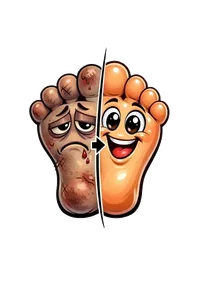
Bunions are progressive, meaning they get worse over time if the underlying cause isn't addressed. Understanding what happens as they advance can help you make an informed decision about when to intervene — ideally before the simple correction becomes a complex reconstruction.
The Anatomy of Progression
A bunion (hallux valgus) is not just a bump — it's a misalignment of the first metatarsophalangeal (MTP) joint. The first metatarsal drifts medially (toward the midline) while the big toe angles laterally (toward the smaller toes). The "bump" you see is the exposed metatarsal head, not a growth of new bone.
As the angle between the metatarsal and the big toe increases, several things happen progressively.
Stage 1: Mild Deformity — Occasional Pain
The bump is noticeable but small. Pain is intermittent, usually triggered by specific shoes or prolonged walking. The big toe still functions normally. At this stage, conservative measures — wider shoes, toe spacers, padding, and orthotics to control pronation — can effectively manage symptoms and may slow progression.
This is also the ideal time for surgical correction if it's needed. The deformity is mild, the joint is still flexible, and the correction is straightforward. Minimally invasive bunion repair at this stage involves small incisions, minimal tissue disruption, and a rapid recovery — walking the same day.
Stage 2: Moderate Deformity — Consistent Pain
The bump is prominent. Pain is more frequent and limits shoe choices. The big toe begins pushing against the second toe. The bursa (fluid-filled sac) over the bump becomes chronically inflamed. At this stage, you notice something important: the problems are no longer limited to the bunion itself.
Hammertoe formation. As the big toe pushes laterally, it crowds the second toe, which buckles upward into a hammertoe. The hammertoe then develops its own painful corn on top from shoe friction and a callus on the ball of the foot from altered pressure distribution.
Metatarsalgia. The misaligned first metatarsal no longer carries its share of the body's weight. The load transfers to the second and third metatarsal heads, which aren't designed for it. The result: pain and calluses under the ball of the foot — a condition called transfer metatarsalgia.
Bursitis. The inflamed bursa over the bunion becomes thickened and chronically painful, making even soft shoes uncomfortable.
Stage 3: Severe Deformity — Multiple Problems
The big toe may overlap or underride the second toe. The joint becomes stiff with arthritis. Finding any comfortable shoe becomes genuinely difficult. The secondary problems — hammertoes, metatarsalgia, calluses — are now conditions in their own right that need treatment.
Arthritis of the MTP joint. Years of abnormal joint mechanics erode the cartilage. The joint becomes stiff, swollen, and painful with each step. Once significant arthritis develops, the joint cannot be fully restored to normal — surgical options shift from joint-preserving corrections to joint-limiting procedures.
Gait changes. To avoid loading the painful big toe joint, you alter how you walk. You may roll to the outside of the foot, shorten your stride, or shift weight to the opposite leg. These compensations cause secondary pain in the ankle, knee, hip, or lower back.
Balance impairment. The big toe plays a critical role in balance and push-off during gait. A severely deviated, stiff, or arthritic big toe compromises both, increasing fall risk — particularly concerning in older adults.
The Key Insight: Earlier Is Simpler
Correcting a mild bunion is a relatively simple minimally invasive procedure with rapid recovery. Correcting an advanced bunion with arthritis, hammertoes, and transfer metatarsalgia is a more complex undertaking — sometimes requiring correction of multiple deformities in the same session. The foot still benefits from surgical correction at any stage, but the surgery, recovery, and outcome are all better when addressed earlier in the progression.
What You Can Do Now
If you have an early bunion, manage it with wide toe box shoes, custom orthotics (which won't reverse the bunion but can slow progression by controlling pronation), and monitoring. If the deformity is progressing or causing consistent pain, an evaluation can determine whether conservative management is still adequate or whether minimally invasive correction while the problem is still simple would save you from a more complex procedure later.
The one thing a bunion won't do is get better on its own. The only question is when — not whether — it will need to be addressed.
Frequently Asked Questions
Can a bunion be reversed without surgery?
No. A bunion is a structural bone deformity — the first metatarsal has shifted out of alignment. Splints, toe spacers, and exercises cannot move the bone back. Conservative measures (wider shoes, orthotics, padding) can slow progression and manage pain, but they cannot reverse the deformity.
At what point should a bunion be surgically corrected?
Surgery is typically recommended when pain limits your daily activities or shoe choices despite conservative treatment, the deformity is visibly progressing, or secondary problems (hammertoes, metatarsalgia, bursitis) are developing. Earlier correction is generally simpler than waiting for advanced deformity.
How is minimally invasive bunion surgery different from traditional?
Minimally invasive bunion repair uses 3–5 mm incisions instead of a large open incision, preserves surrounding soft tissue, and allows walking the same day under local anesthesia. Recovery is typically 6–8 weeks to regular shoes versus 3–6 months for traditional approaches.
Ready to Feel Better?
Most patients are seen within 24–48 hours. Schedule your visit today.