
“I highly recommend this place — everyone is really nice and they make sure you feel comfortable.”Google · Kimberly Manilla · Mar 2026
“Podiatrist is very knowledgeable and approachable. Staff is professional and proactive.”Google · Ben C · Feb 2026
“His professional expertise and kind demeanor made my treatment feel effective and comfortable.”Google · Cecil Lynn Farrar · Feb 2026
“Every time I come with pain I leave this place feeling great!”Google · Wendy Aguilar · Nov 2024
“A front office that runs smoothly — you know the doctor MUST be a true professional.”Google · Jerika Steele · Oct 2023
“This is the greatest doctor I've ever met — professional, polite, and knows what he does.”Google · Don Jair Casas · Dec 2025
“Dr. P, Ms. Theresa, and Ms. Maria are some of the kindest people you'll ever meet.”Google · Charles Ward · Jan 2026
“Staff was friendly and helpful. Clear instructions and a plan for recovery.”Google · Maurico Payne · Jan 2026
“The best foot doctor I have found in 40 years.”Google · Dwight Herkness · Aug 2019
“I wish I could give Dr. Patish 10 stars!!! He has literally been a life changer.”Yelp · Troy E. · Aug 2019
“Thank you Dr. Patish for taking great care of my parents!”Google · Elizabeth Naranjo · Feb 2026
“He is amazing — truly cares about my quality of life.”Healthgrades · Mar 2019
“I highly recommend this place — everyone is really nice and they make sure you feel comfortable.”Google · Kimberly Manilla · Mar 2026
“Podiatrist is very knowledgeable and approachable. Staff is professional and proactive.”Google · Ben C · Feb 2026
“His professional expertise and kind demeanor made my treatment feel effective and comfortable.”Google · Cecil Lynn Farrar · Feb 2026
“Every time I come with pain I leave this place feeling great!”Google · Wendy Aguilar · Nov 2024
“A front office that runs smoothly — you know the doctor MUST be a true professional.”Google · Jerika Steele · Oct 2023
“This is the greatest doctor I've ever met — professional, polite, and knows what he does.”Google · Don Jair Casas · Dec 2025
“Dr. P, Ms. Theresa, and Ms. Maria are some of the kindest people you'll ever meet.”Google · Charles Ward · Jan 2026
“Staff was friendly and helpful. Clear instructions and a plan for recovery.”Google · Maurico Payne · Jan 2026
“The best foot doctor I have found in 40 years.”Google · Dwight Herkness · Aug 2019
“I wish I could give Dr. Patish 10 stars!!! He has literally been a life changer.”Yelp · Troy E. · Aug 2019
“Thank you Dr. Patish for taking great care of my parents!”Google · Elizabeth Naranjo · Feb 2026
“He is amazing — truly cares about my quality of life.”Healthgrades · Mar 2019
What Causes Burning Pain in the Ball of Your Foot?
Burning, aching, or a pebble-in-your-shoe feeling under the toes? It could be Morton's neuroma or metatarsalgia. Here's how to tell and what helps.
You're walking and suddenly feel like there's a pebble in your shoe — except there isn't one. Or you notice a burning, aching sensation in the ball of your foot that gets worse in shoes and better when you take them off and rub the area. Maybe the pain radiates into your toes or you feel numbness between them.
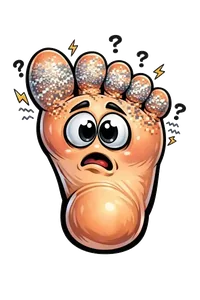
Pain in the ball of the foot — the padded area just behind the toes — is extremely common and has two primary causes: Morton's neuroma and metatarsalgia. They can feel similar but involve different structures and respond to different treatments.
Morton's Neuroma
A Morton's neuroma is a thickening of the tissue around a nerve that runs between the metatarsal bones, most commonly between the third and fourth toes. It's not a tumor — the name is misleading. It's a fibrotic thickening caused by chronic irritation or compression of the nerve.
Classic symptoms include sharp or burning pain in the ball of the foot, a feeling that you're standing on a fold in your sock or a pebble, numbness or tingling that radiates into the third and fourth toes, and relief when you take off your shoe and massage the area. The pain is typically worse in narrow or tight-fitting shoes and during activities that put pressure on the forefoot.
Women are affected far more often than men, largely due to footwear — narrow toe boxes and elevated heels compress the metatarsal heads together, squeezing the nerve between them.
Metatarsalgia
Metatarsalgia is a broader term for pain and inflammation in the ball of the foot, usually involving the metatarsal heads themselves rather than the nerve. It feels like a deep ache or bruise under the toes, often across a wider area than Morton's neuroma. The pain worsens with walking, running, or standing for long periods — especially on hard surfaces.
Common causes include high arches (which concentrate weight on the ball of the foot), a long second metatarsal, wearing high heels regularly, high-impact activities like running or jumping, and excess body weight. It can also develop after bunion surgery if the weight distribution across the forefoot shifts.
How to Tell Them Apart
Both cause ball-of-foot pain, but there are distinguishing features. Morton's neuroma tends to produce sharp, shooting, or electric-like pain localized between two specific toes, often with numbness or tingling. Metatarsalgia is more of a diffuse aching or bruised feeling under multiple metatarsal heads without the nerve symptoms. A diagnostic squeeze test in the office — compressing the metatarsals together — often reproduces the neuroma pain with a palpable click.
What Helps
Both conditions respond well to conservative treatment when caught early. The first-line approach for either is modifying footwear — switching to shoes with a wide toe box and low heel reduces compression on the forefoot immediately. Custom orthotics with a metatarsal pad can lift and separate the metatarsal heads, taking pressure off the irritated nerve or inflamed bone.
For Morton's neuroma specifically, padding modifications, injection therapy, and in stubborn cases, shockwave therapy can reduce the fibrotic tissue around the nerve. Surgery to remove the neuroma is effective but reserved for cases that don't respond to conservative care.
For metatarsalgia, addressing the underlying biomechanical cause is key. Orthotics, activity modification, and ice during flare-ups resolve most cases. If a structural issue like a prominent metatarsal head is the driver, that can be addressed surgically with minimally invasive techniques.
Ball-of-foot pain is very treatable — but it rarely resolves on its own. The longer you walk on an irritated nerve or inflamed metatarsal, the harder it becomes to calm down. Most patients see significant improvement within a few weeks of starting treatment.
The Bottom Line
If you're feeling burning, aching, or a pebble sensation in the ball of your foot, don't just switch shoes and hope for the best. A quick evaluation tells you exactly what's causing it and which approach will fix it fastest. Call (760) 728-4800 to schedule.
Frequently Asked Questions
What causes burning pain in the ball of the foot?
Common causes include metatarsalgia (inflammation of the metatarsal heads), Morton's neuroma, sesamoiditis, or capsulitis. Improper footwear, high-impact activity, and foot structure all contribute.
Is Morton's neuroma the same as ball-of-foot pain?
Morton's neuroma is one specific cause — a thickened nerve between the metatarsal heads, typically the third and fourth toes. It causes burning, tingling, and numbness, not just pain.
When should I see a podiatrist for ball-of-foot pain?
If the pain persists beyond 1–2 weeks, worsens with walking, or includes numbness or tingling, professional evaluation can identify the specific cause and prevent progression.
Ready to Feel Better?
Most patients are seen within 24–48 hours. Schedule your visit today.