
“Staff is always friendly… explains everything in detail.”Barbara P. · Yelp
“Knowledgeable and personable… excellent service.”Frank O. · Yelp
“Amazing staff and a wonderful doctor! Everyone was so kind and gentle — we felt truly cared for.”Ariana O. · Google
“Dr Grigoriy is the absolute best… the man to go and see!”Uk Charlie · Google
“He is amazing… tells me what is really wrong… truly cares.”Healthgrades reviewer · Healthgrades
“Totally my kind of doctor — tiny office, lots of time, lots of good questions, and a GREAT personable, droll man.”Google reviewer · Google
“Staff is always friendly… explains everything in detail.”Barbara P. · Yelp
“Knowledgeable and personable… excellent service.”Frank O. · Yelp
“Amazing staff and a wonderful doctor! Everyone was so kind and gentle — we felt truly cared for.”Ariana O. · Google
“Dr Grigoriy is the absolute best… the man to go and see!”Uk Charlie · Google
“He is amazing… tells me what is really wrong… truly cares.”Healthgrades reviewer · Healthgrades
“Totally my kind of doctor — tiny office, lots of time, lots of good questions, and a GREAT personable, droll man.”Google reviewer · Google
“Staff is always friendly… explains everything in detail.”Barbara P. · Yelp
“Knowledgeable and personable… excellent service.”Frank O. · Yelp
“Amazing staff and a wonderful doctor! Everyone was so kind and gentle — we felt truly cared for.”Ariana O. · Google
“Dr Grigoriy is the absolute best… the man to go and see!”Uk Charlie · Google
“He is amazing… tells me what is really wrong… truly cares.”Healthgrades reviewer · Healthgrades
“Totally my kind of doctor — tiny office, lots of time, lots of good questions, and a GREAT personable, droll man.”Google reviewer · Google
“Staff is always friendly… explains everything in detail.”Barbara P. · Yelp
“Knowledgeable and personable… excellent service.”Frank O. · Yelp
“Amazing staff and a wonderful doctor! Everyone was so kind and gentle — we felt truly cared for.”Ariana O. · Google
“Dr Grigoriy is the absolute best… the man to go and see!”Uk Charlie · Google
“He is amazing… tells me what is really wrong… truly cares.”Healthgrades reviewer · Healthgrades
“Totally my kind of doctor — tiny office, lots of time, lots of good questions, and a GREAT personable, droll man.”Google reviewer · Google
Athlete's Foot Treatment
Effective treatment for athlete's foot, fungal skin infections, and chronic tinea pedis. Stop the itch, clear the infection, and prevent recurrence at Fallbrook Podiatry.
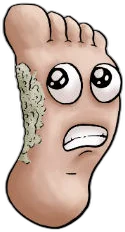 At a glance: Athlete's foot (tinea pedis) is the most common fungal skin infection of the feet. While mild cases respond to over-the-counter antifungals, chronic, recurrent, or widespread infections often require prescription-strength treatment and a strategy to eliminate the underlying cause. Left untreated, athlete's foot frequently spreads to the toenails — creating a much harder problem to resolve. Learn about our toenail fungus laser treatment.
Athlete's Foot — More Than Just an Itch
Athlete's foot is caused by dermatophyte fungi — the same organisms responsible for toenail fungus, ringworm, and jock itch. Despite the name, you don't need to be an athlete to get it. Anyone who walks barefoot in communal areas, sweats in closed shoes, or has a warm, moist foot environment is susceptible. In Southern California's warm climate, we see athlete's foot year-round.
What makes it more than a minor nuisance: untreated athlete's foot creates cracks in the skin that can become entry points for bacterial infections (cellulitis), and the fungal organisms readily migrate from skin to nails — turning a treatable skin condition into a chronic nail infection that's far more difficult to eliminate.
Types of Athlete's Foot
Not all athlete's foot looks the same. The clinical presentation determines the best treatment approach.
Interdigital (Between the Toes)
The most common type. The skin between the toes — especially the 4th and 5th toe web space — becomes white, macerated, and peeling. It often itches, burns, or stings. This moist environment is ideal for fungal growth and secondary bacterial infection.
Moccasin Type
Often misdiagnosed as dry skin or eczema. The soles, heels, and sides of the feet develop chronic dryness, scaling, and thickening. It may be mildly itchy or completely asymptomatic. This type is typically caused by Trichophyton rubrum and tends to be more resistant to treatment because of the thickened skin barrier.
Vesicular (Blistering)
Less common but more dramatic. Fluid-filled blisters appear on the sole, arch, or between the toes. This type can be intensely itchy and is sometimes confused with contact dermatitis or dyshidrotic eczema. A proper diagnosis matters because the treatment is different.
Our Treatment Approach
We don't just prescribe antifungals and hope for the best. Effective athlete's foot treatment requires identifying the type, eliminating the reservoir, and preventing recurrence.
Diagnosis
A clinical exam is usually sufficient, but when the presentation is atypical or hasn't responded to prior treatment, we may perform a skin scraping or culture to confirm the organism and rule out look-alike conditions (eczema, psoriasis, contact dermatitis).
Topical Therapy
For most interdigital and mild moccasin-type infections, prescription-strength topical antifungals are the first line. These are more effective than over-the-counter options because they achieve higher drug concentrations in the skin and target a broader range of organisms. Treatment duration is typically 2–4 weeks — and it's critical to complete the full course even after symptoms resolve.
Oral Antifungal Therapy
For moccasin-type infections, widespread disease, recurrent cases, or infections that have spread to the nails, oral antifungal medication may be necessary. We prescribe these judiciously, with appropriate lab monitoring, and typically coordinate with your primary care physician.
Addressing the Nail Reservoir
If your toenails show signs of fungal involvement — thickening, yellowing, crumbling — treating the skin alone won't produce lasting results. The infected nail acts as a constant source of re-infection. Our laser toenail fungus treatment can address the nail component alongside skin treatment for a comprehensive approach.
Secondary Infection Management
Cracked, fissured skin from athlete's foot is a common entry point for bacterial infection. If there's redness, warmth, swelling, or drainage extending beyond the fungal rash, we evaluate for secondary bacterial cellulitis and treat accordingly. This is especially important for patients with diabetes or compromised circulation.
Prevention — Breaking the Cycle
Recurrence is the biggest frustration with athlete's foot. These strategies address the environmental factors that keep the infection coming back.
- Rotate shoes daily — never wear the same pair two days in a row. Shoes need 24–48 hours to fully dry.
- Moisture-wicking socks — synthetic or wool blends, not cotton. Change socks mid-day if your feet sweat heavily.
- Antifungal powder or spray in shoes — weekly maintenance after clearing the infection.
- Sandals in shared spaces — gym showers, pool decks, hotel bathrooms.
- Dry between toes thoroughly after bathing — the interdigital spaces are where most infections start.
- Treat nail fungus — an infected toenail is a perpetual reservoir that will keep re-seeding skin infections.
For additional prevention tips, see the MedlinePlus: Athlete's Foot resource from the National Library of Medicine.
When to See a Podiatrist
Most people try over-the-counter antifungal creams first — and for mild, first-time cases, that's reasonable. But you should see us if the infection hasn't cleared after 2–4 weeks of OTC treatment, keeps recurring despite prevention efforts, involves cracked or bleeding skin, has spread to the toenails, or you have diabetes or any condition affecting circulation or immunity. Early professional treatment prevents the cascade from simple skin infection to chronic nail disease.
Athlete's Foot in Special Populations
Athletes and Military Personnel
Prolonged time in boots or athletic shoes creates the perfect environment for fungal growth. We see this frequently in Marines from Camp Pendleton, hikers, runners, and anyone in occupational footwear. Preventive strategies are especially important for this group.
Diabetic Patients
Athlete's foot in a diabetic patient is never "just athlete's foot." The cracked skin creates ulceration risk, and the infection itself can worsen glycemic control. If you have diabetes and suspect a foot fungus, don't wait — schedule a diabetic foot evaluation promptly.
Children
Athlete's foot is uncommon in young children but becomes more frequent in adolescents, especially those in sports. Shared locker rooms and communal showers are typical sources. Treatment is similar but we use age-appropriate formulations.
Schedule Your Evaluation
Tired of dealing with itchy, peeling, cracked feet? Let's identify the cause and clear it properly — so you're not still fighting the same infection six months from now. Call or text (760) 728-4800 to schedule at our Fallbrook or Temecula office.
Frequently Asked Questions
What does athlete's foot look like?
Athlete's foot typically appears as red, flaky, peeling skin between the toes or on the soles. It may crack, itch, burn, or sting. In the moccasin type, the entire sole and sides of the foot become dry, scaly, and thickened — often mistaken for simple dry skin. Blistering and weeping may occur in acute cases.
Can athlete's foot spread to toenails?
Yes. Untreated tinea pedis is the most common source of toenail fungus (onychomycosis). The same dermatophyte organisms that infect the skin readily invade the nail plate. Treating athlete's foot promptly helps prevent fungal nail infections.
Why does my athlete's foot keep coming back?
Recurrence usually happens because the original infection wasn't fully cleared, the environment that caused it hasn't changed (damp shoes, shared showers), or there is an untreated fungal nail reservoir re-infecting the skin. A podiatrist can identify the underlying cause and build a prevention plan.
When should I see a podiatrist instead of using OTC products?
See a podiatrist if over-the-counter antifungals haven't resolved the infection after 2–4 weeks, if the infection is spreading or blistering, if you have diabetes or compromised immunity, if the skin is cracked and painful, or if you suspect the infection has spread to your nails.
Is athlete's foot contagious?
Yes. Dermatophyte fungi spread through direct contact or by walking barefoot on contaminated surfaces — locker room floors, pool decks, shared showers, and hotel carpets are common sources. The fungi also thrive inside warm, damp shoes.
Authoritative Medical Resources: Centers for Disease Control and Prevention · American Academy of Dermatology